smallcase
2024
HMW help investors seamlessly track & manage all smallcase subscriptions?
Responsibility
Lead product designer
and core UX architecture
Team
3 Designers, 2 Product Managers,
12+ Engineers
Time
Mar - April, 2024
Problem
As smallcase scaled, investors subscribed to multiple smallcase through different advisors without a unified way to view, manage, or exit them
Control was fragmented across advisor microsites and inboxes, creating anxiety and accidental renewals. Users lacked a reliable system to track and manage ongoing commitments
Design outcome
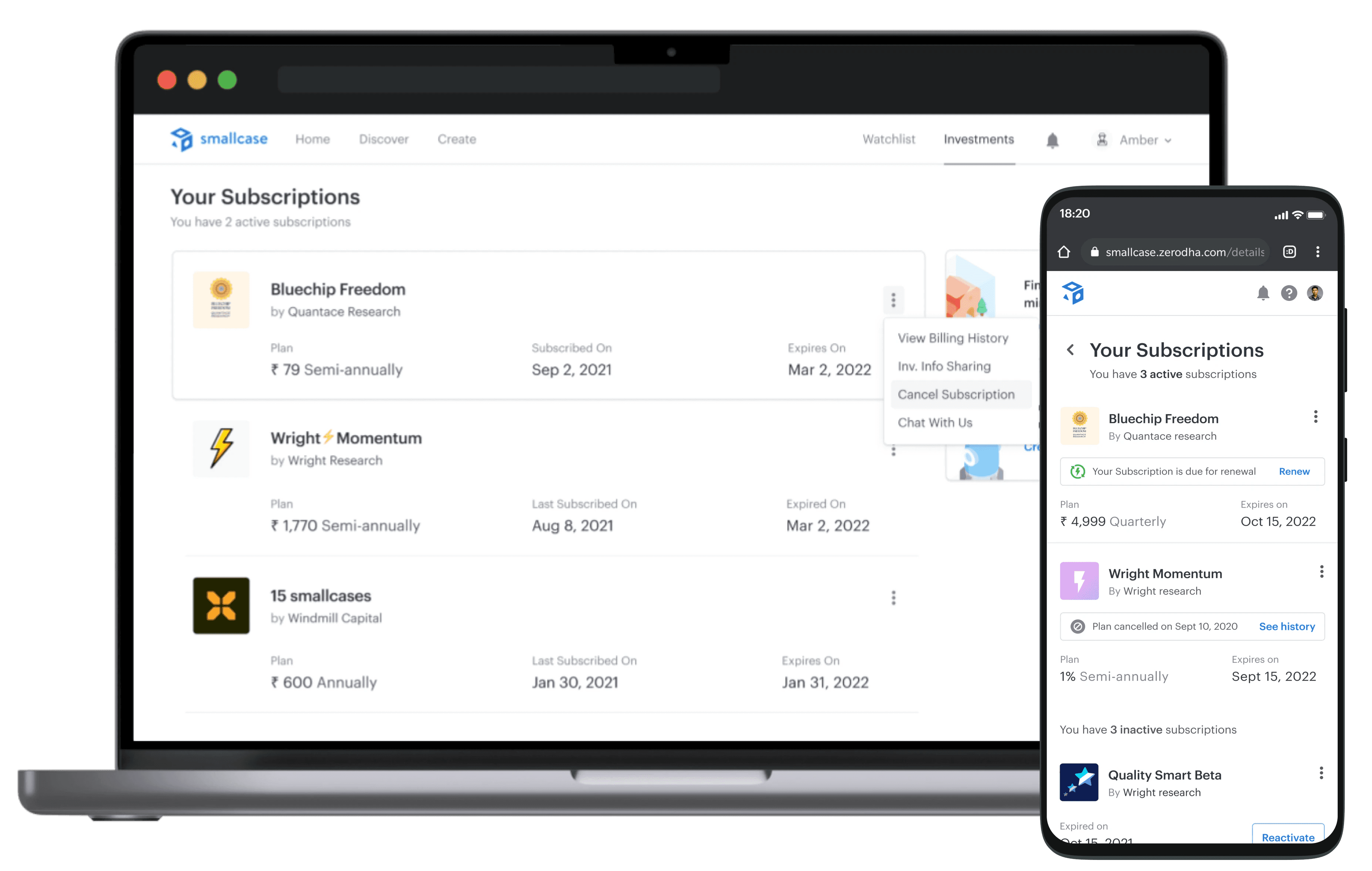
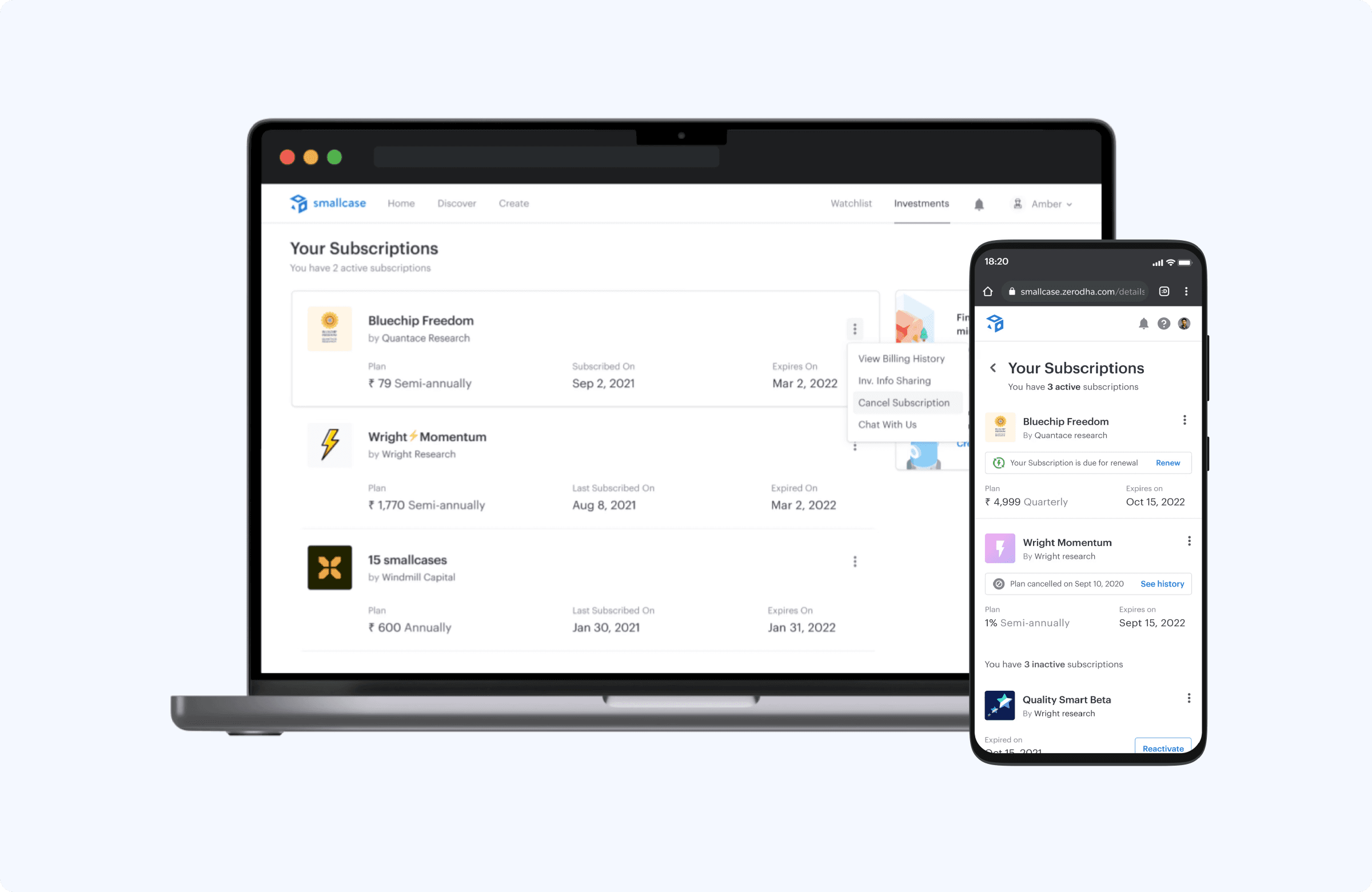
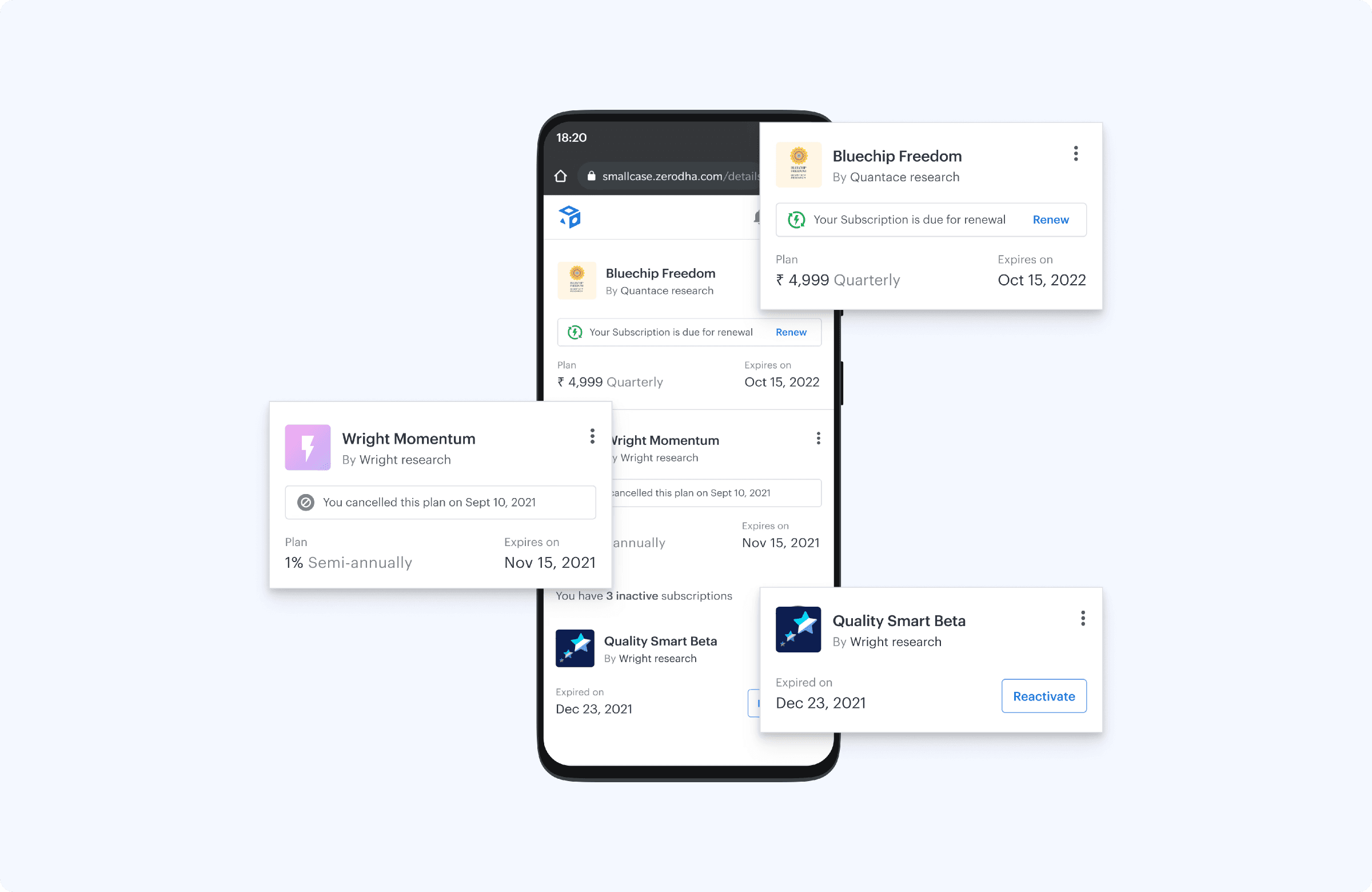
We shifted subscription management from advisor-owned flows to a unified platform system, giving users a single, reliable surface for all subscriptions
Within six months, subscription management reached
300k
adoption for subscription management within 6 months
24%
uplift in annual fixed revenue
65%
reduced subscription-related tickets
Why this problem mattered
Subscriptions are a core monetization lever for smallcase and the backbone of the advisor ecosystem.
While investing journeys were mature, subscription management remained opaque, fragmented, and support-dependent, creating three systemic risks
Subscriptions were effectively advisor-owned flows. Fixing this meant redesigning the system, not polishing individual screens.
User trust risk: accidental renewals and unclear cancellations
Revenue risk: churn driven by frustration, not intent
Operational risk: high support dependency for basic billing needs
What users were struggling with
I interviewed 50+ active subscribers (single- and multi-manager) to understand behavioral and emotional friction, not just surface usability issues
🤨
Users had no single source of truth.
💸
Cancellations were easy to forget and expensive to miss
🧾
Invoices were buried in inboxes or locked behind support tickets
Core insight
The system worked only when nothing went wrong, an unacceptable assumption in a financial product.
User trust risk due to accidental renewals and unclear cancellations
Revenue risk churn driven by frustration, not intent
Operational risk as high support dependency for basic billing needs
Defining the problem
HMW help users seamlessly track and manage all smallcase subscriptions at one place?
Design goals
The goal was to make subscriptions controllable, and trustworthy across their full lifecycle
We optimized for
Clear ownership of all subscriptions, active or inactive
Predictable billing and renewal behaviour
Reduced dependency on support through clarity by design
Billing records were scattered across emails
Trade-offs
Less advisor level flexibility to gain platform trust
Building shared infrastructure increased upfront engineering cost, but simplified future monetization features
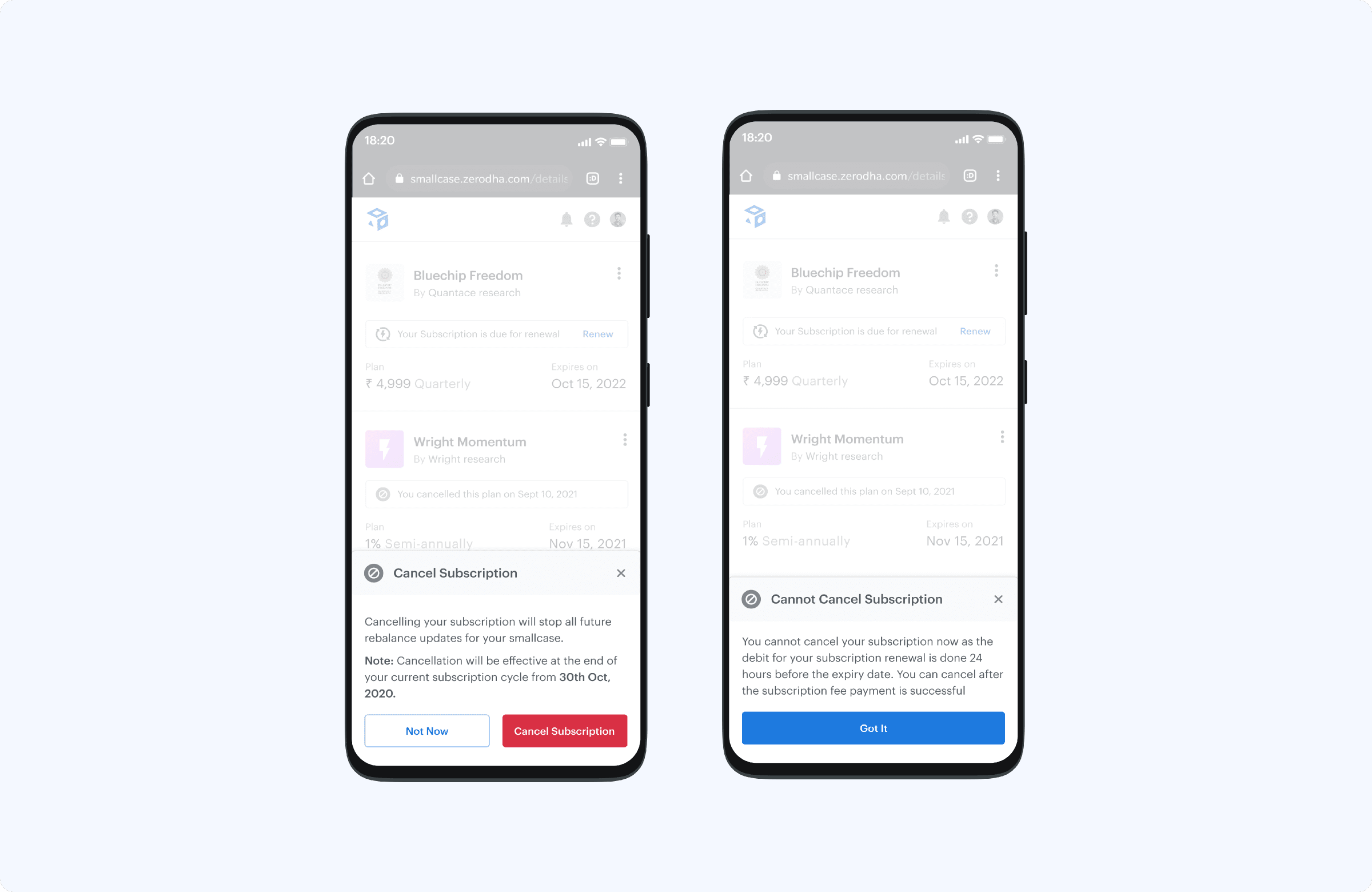
Making cancellation easier risked short-term revenue loss, but reduced accidental churn and support-driven dissatisfaction
Design Highlights
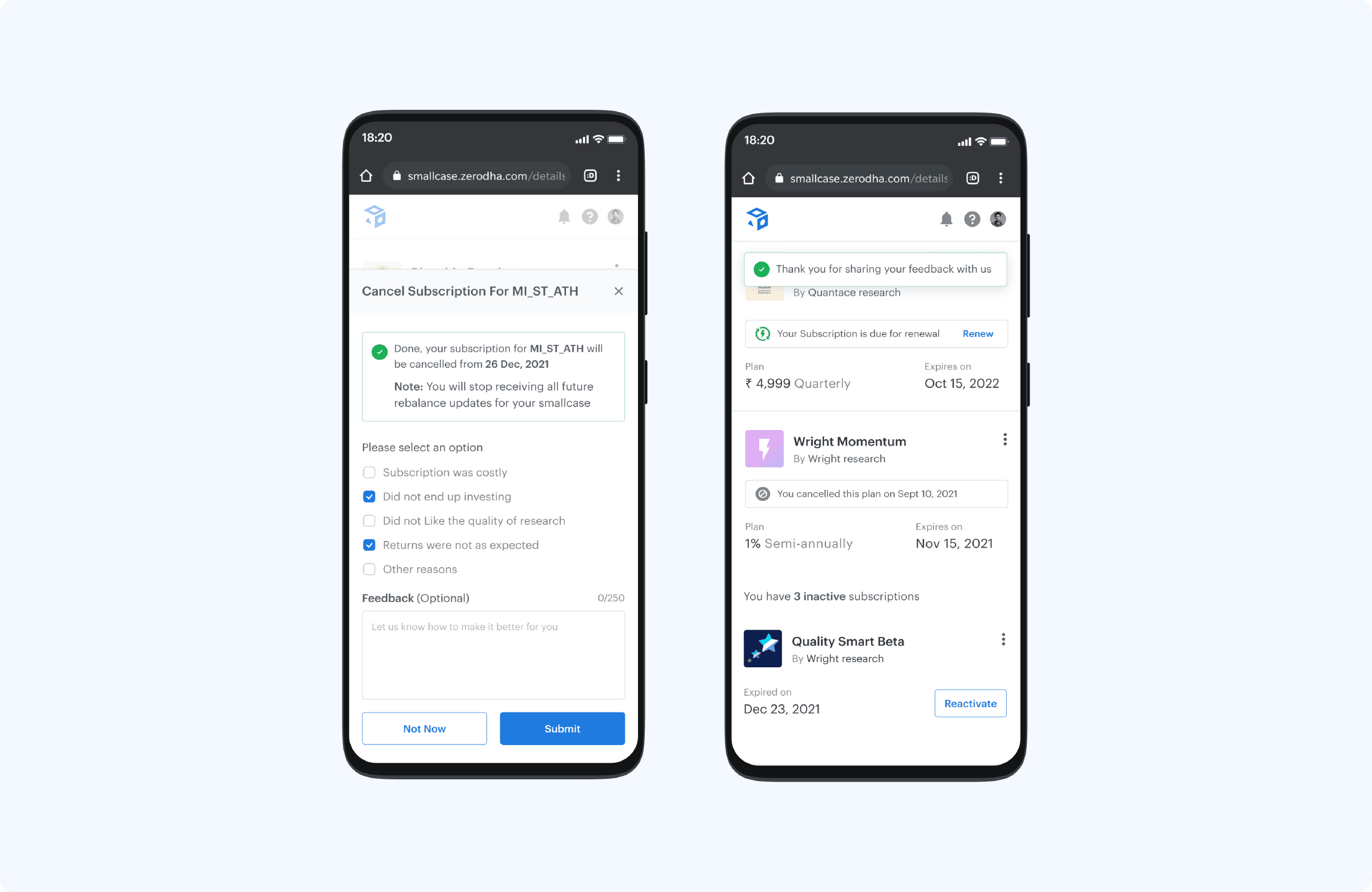
Each change addressed a failure in ownership, predictability, or accountability across the subscription lifecycle
Reflections
This project reshaped how I think about monetization UX
Subscription systems are trust systems. By shifting ownership to users, we reduced support, improved renewal confidence, and set a precedent for future paid features.