Zomato
SHIPPED 2025
Turning performance anxiety into competitive action for restaurant owners
Context
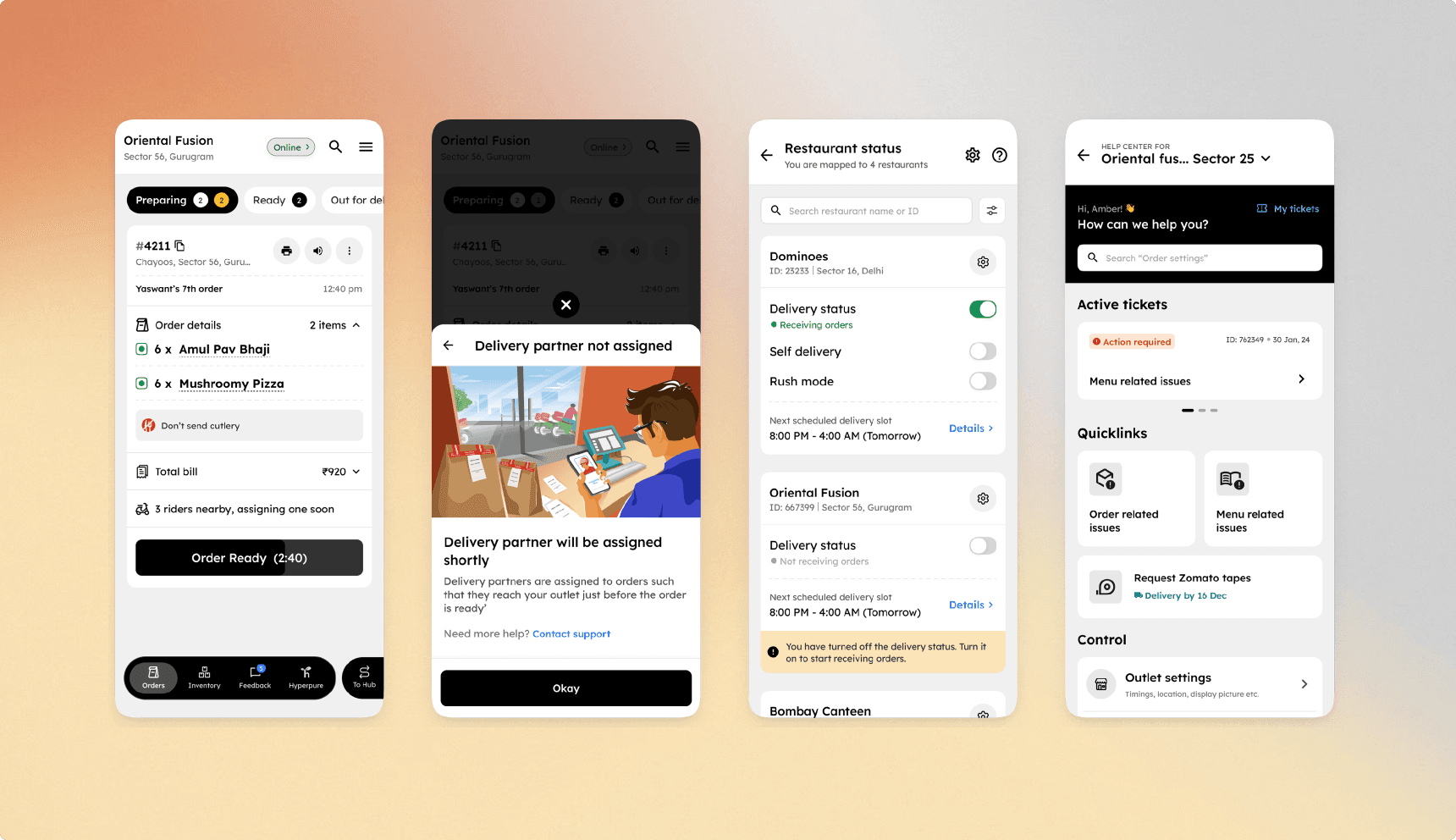
Restaurant partners wanted to grow their food delivery business but couldn't identify what to fix
Guidance was scattered across dashboards, KAM calls, and quarterly reviews. When orders dropped 15%, partners couldn't diagnose whether the issue was their menu, delivery speed, or new local competition
Product Designer and researcher
Led product design, competitive benchmarking strategy, and cross-functional alignment to define scalable peer comparison logic
Team

Vaibhav Kumar
Product head

Guru Pramod
Product Manager

Gaurav Shukla
Engineer
Duration
December - March, 2025
IMPact
3x Increase in Insight to Action
Partners who viewed competitive positioning were 3x more likely to adjust pricing, refresh menus, or extend hours within 48 hours—without KAM intervention. Competitive clarity turned performance anxiety into concrete next steps.
30% reduction in support related queries
KAMs stopped spending 30+ minutes per week explaining basic performance trends. The system surfaced competitive displacement automatically
Design Solution
Competition Insights
the problem
Partners were competing blind
The right data already existed—delivery times, menu overlap, local competition—but it was fragmented across dashboards, KAM conversations, and reports. Without clear peer context, owners couldn’t diagnose if drops were driven by menu, experience, or new local entrants, and generic nudges like “run ads” felt extractive instead of genuinely helpful
Problem statement
How might we drive self-serve growth through competitive insights?
This framing emerged from the four core problems. Partners needed clarity on where they stood (context), confidence in who they were competing against (transparent peers), and concrete actions to close gaps (actionable guidance).
The question was how do we transform performance metrics into actionable competitive intelligence that drives self-serve decisions?
Product Goals
Transform fragmented performance data into competitive intelligence that drives self-serve actions
with trustworthy benchmarks that reveal true market position and reduce dependency on support teams
that fosters healthy competition and trust by openly explaining gaps against market leader
Rejected
Early concepts leaned on public leaderboards to "spark healthy competition" between restaurant
In critique, the risk was obvious: partners would optimize for rank, not real performance—dropping prices, over‑discounting, and cherry‑picking peers just to look good.
We cut the pattern before launch and set a core constraint for the product: only anonymized, aggregated benchmarks. This shifted the design from vanity comparison to actionable gaps, so partners focus on closing performance deltas instead of chasing a leaderboard.
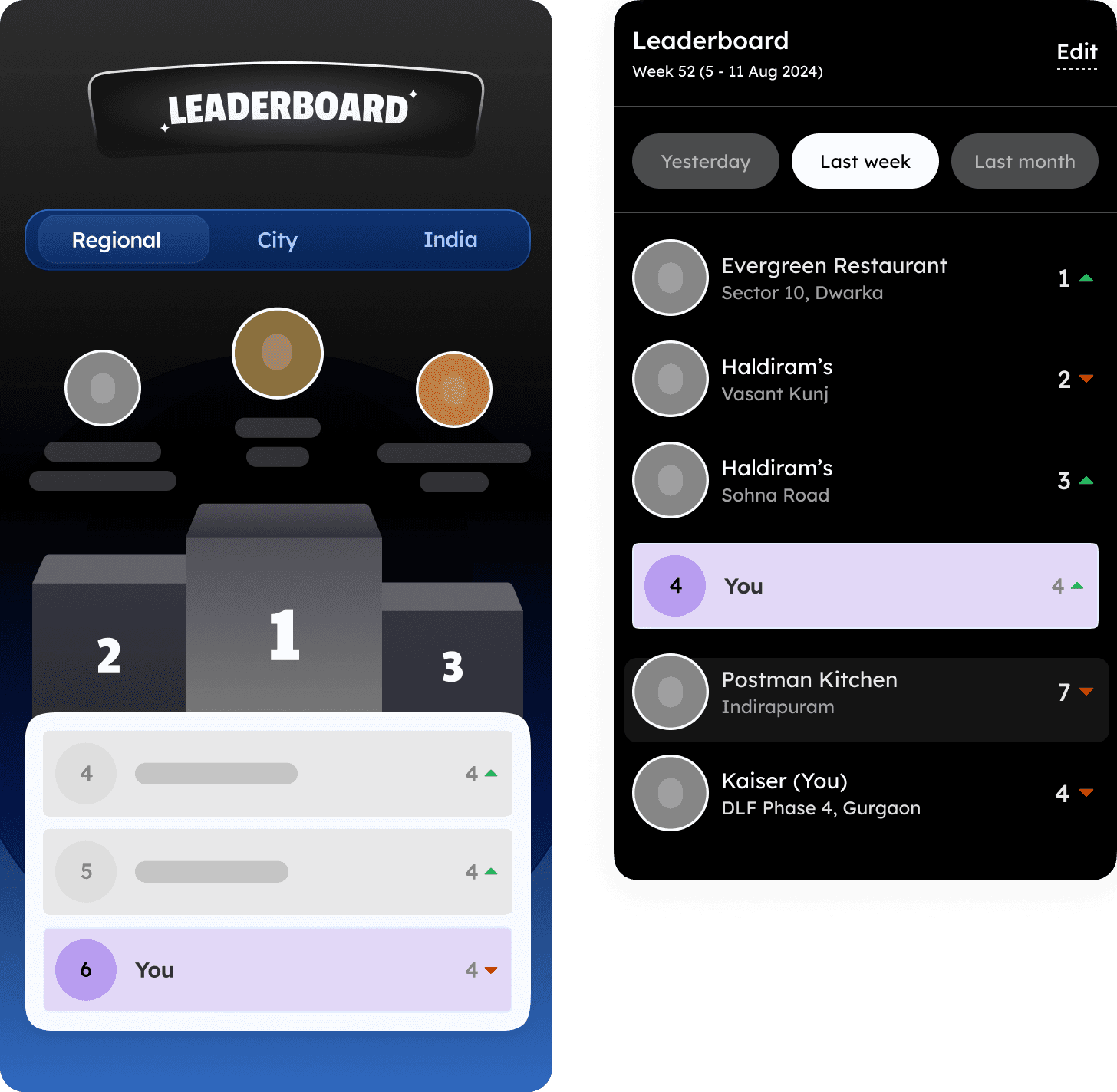
some of the early Rejected explorations
Design Highlights
Each highlight captures a key aspect of the Competition Insight product, showing which design goal it supports, the operational challenge it addresses for restaurant partners, and the design solution that makes insights actionable
Give partners contextual clarity
Lead with market position
Problem
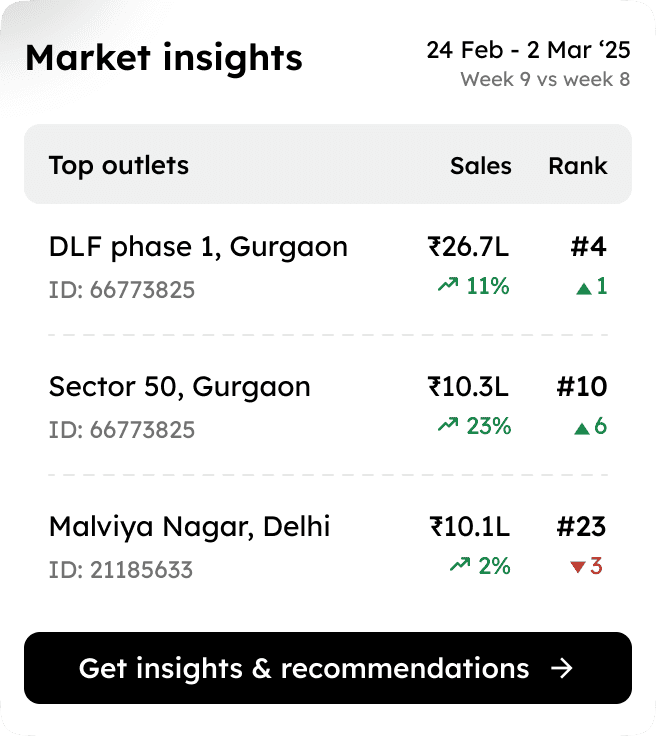
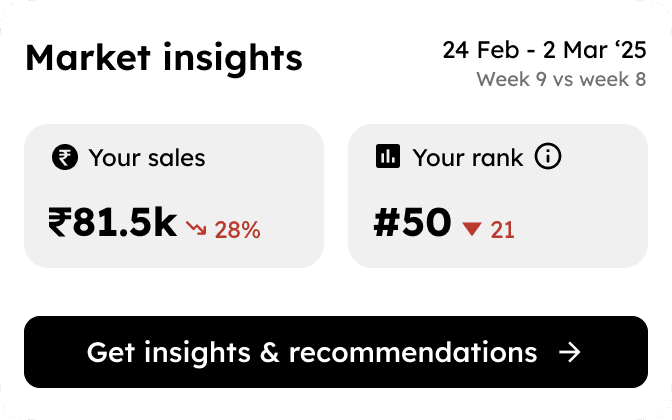
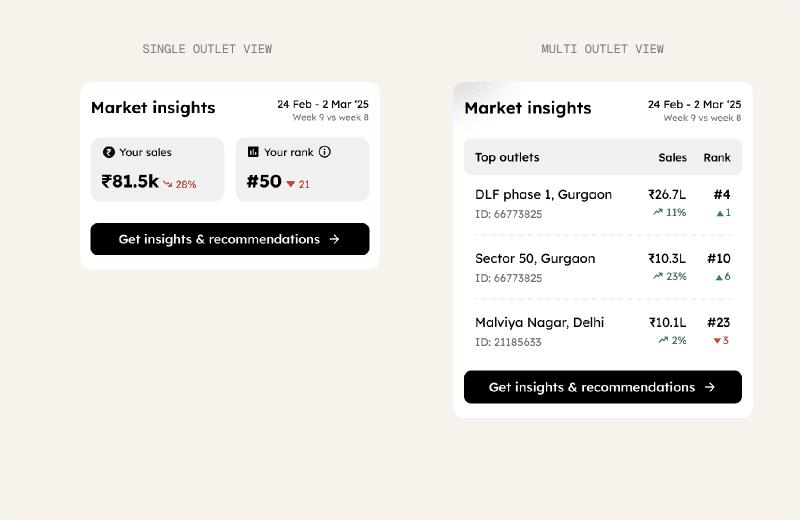
Partners misjudge growth because they view their numbers without market context
Solution
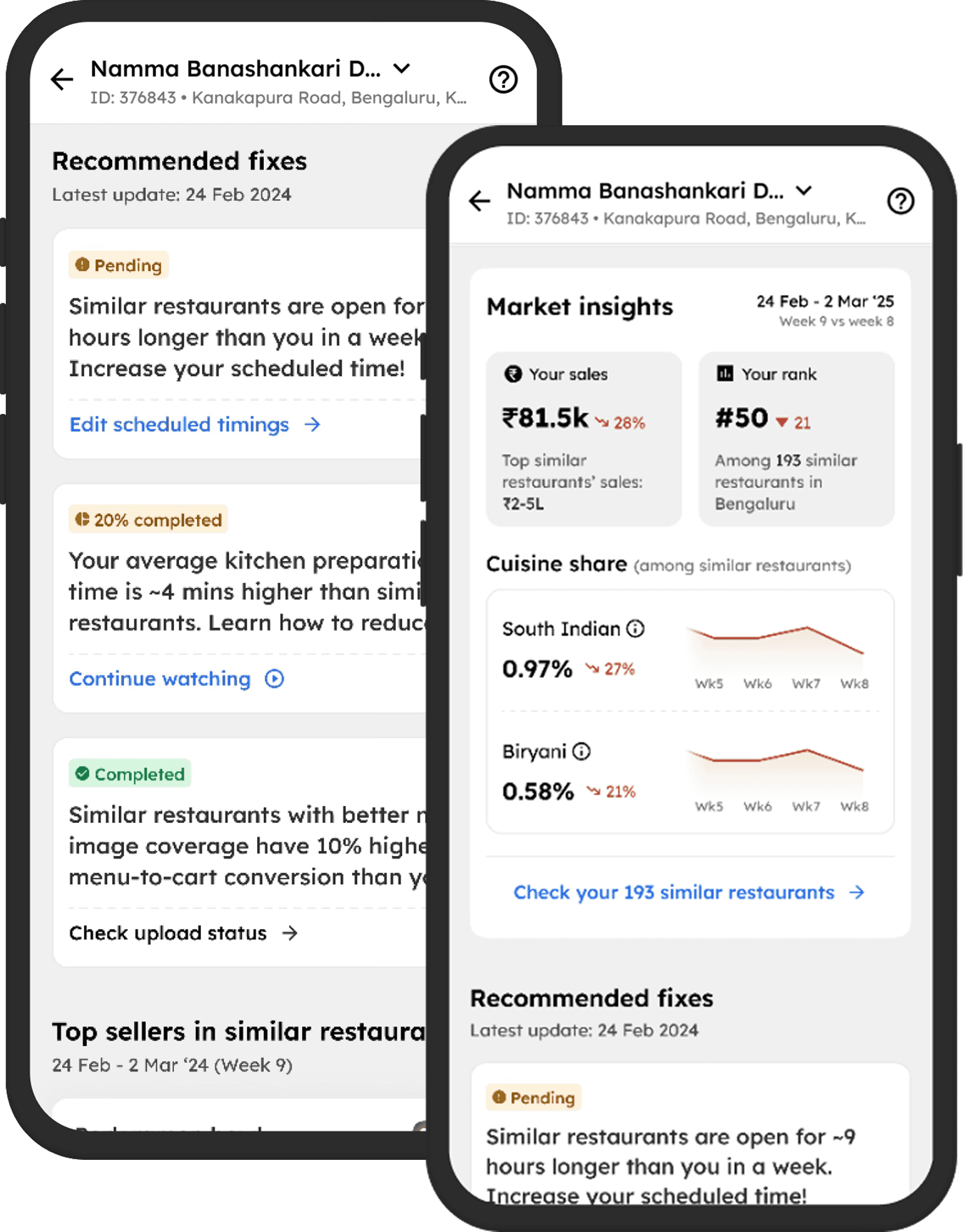
Ground the experience in relative performance so partners immediately see whether they’re truly ahead or behind, cutting through seasonal noise and triggering a more competitive, improvement-focused mindset
Surface actionable, early signals
Turn growth strategy into guided, timely action
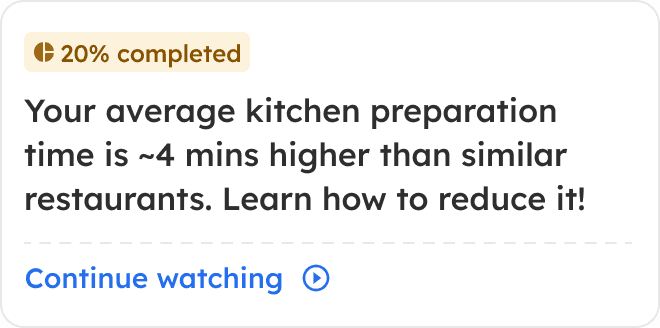
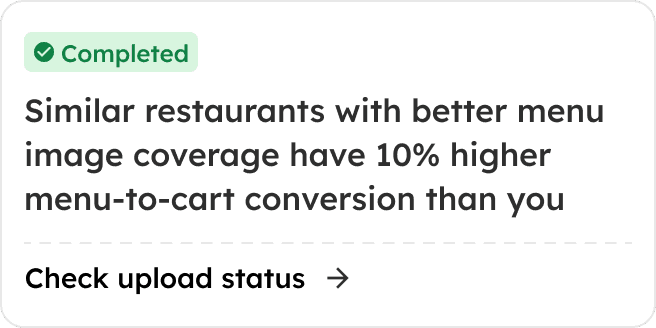
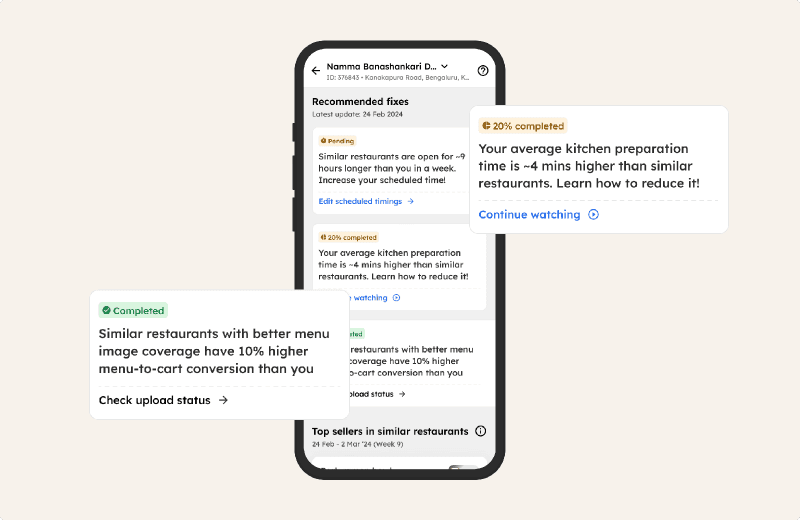
Problem
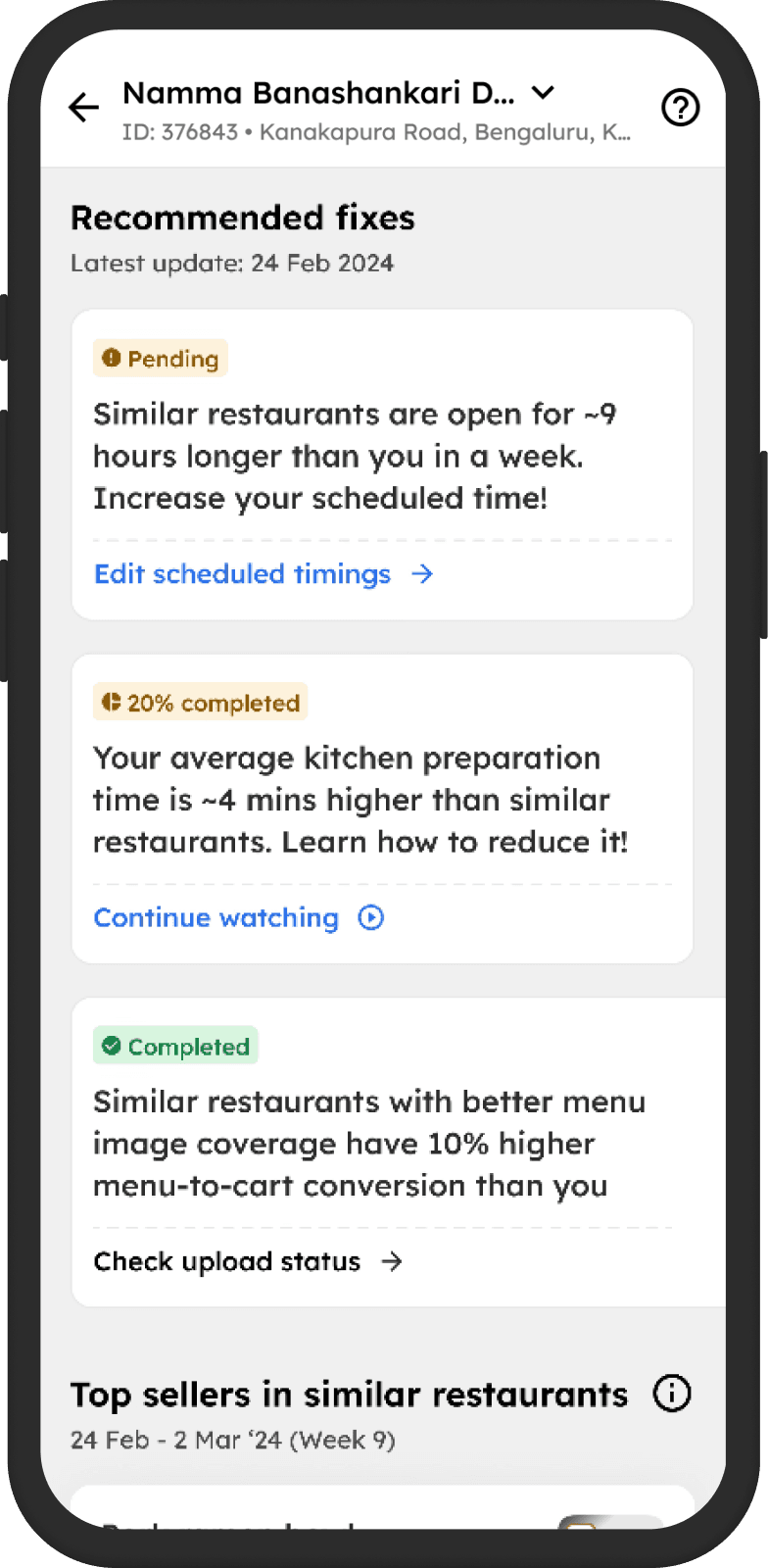
Existing recommendations are buried and important alerts are missing
Solution
Give clear, funnel-wide suggestions and timely alerts to flag underperformance and enable smarter decisions.
Transparent, peer-based benchmarking
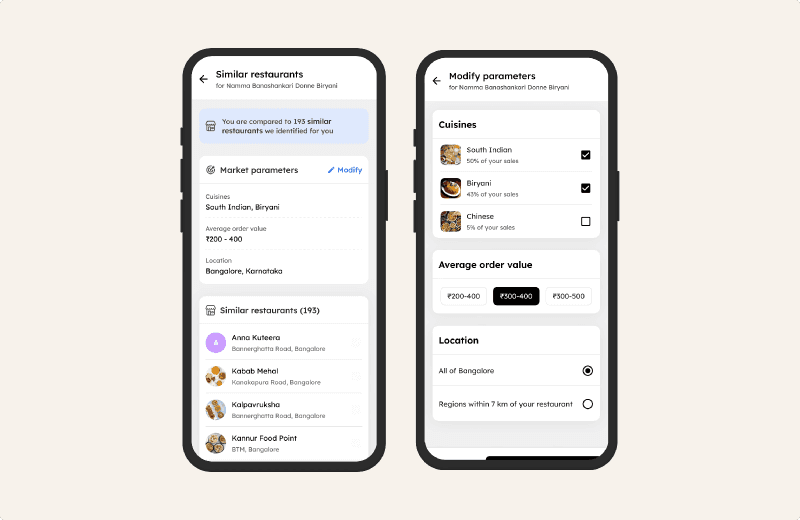
Build trust through transparent benchmarking
Problem
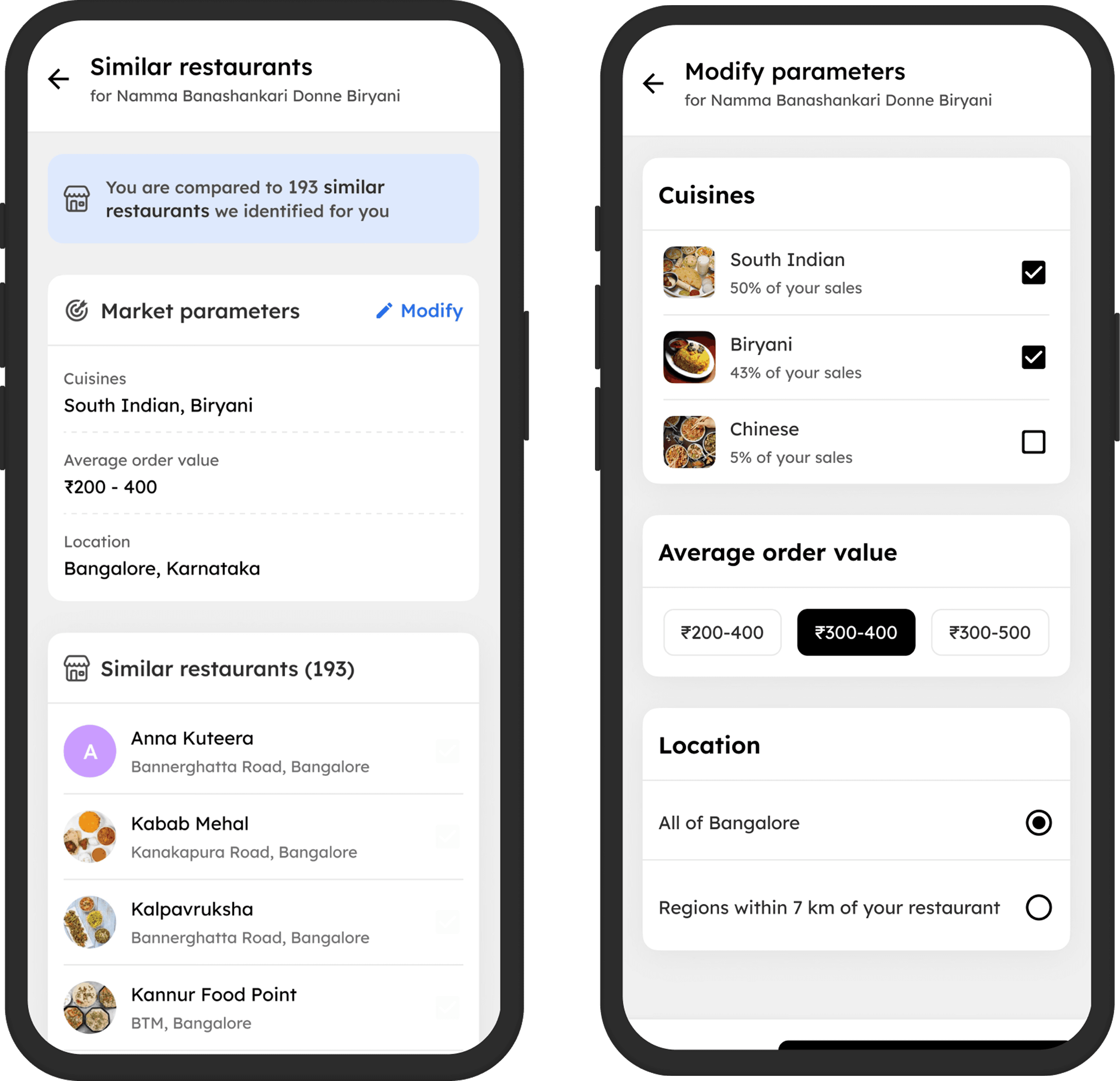
City-wide averages feel too generic, and lack of control erodes confidence in insights.
Solution
Make the competitor set transparent and editable. Use filters like cuisine, AOV, and delivery zone to auto-select peers, while giving RPs the power to adjust this set as their business evolves.
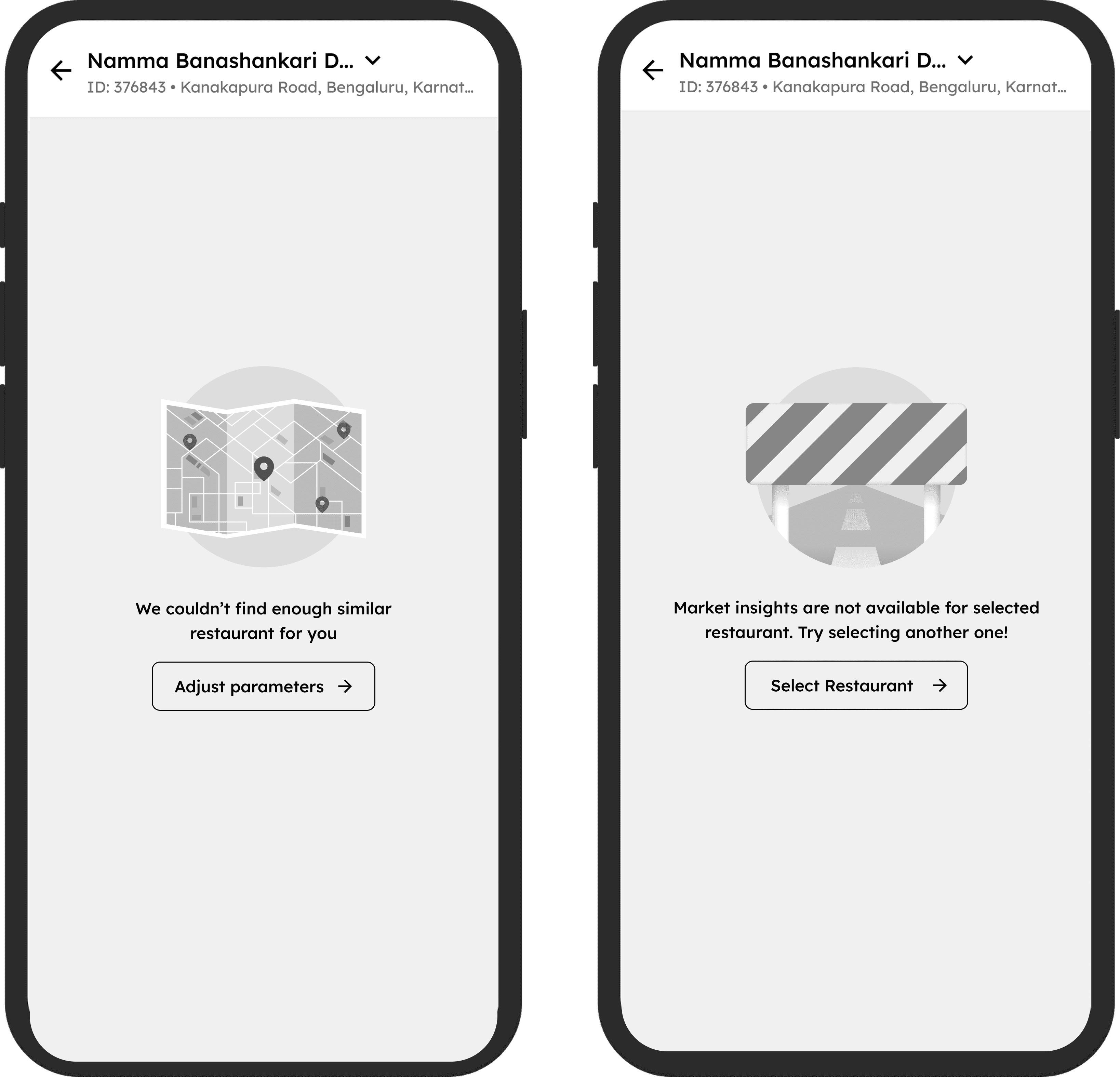
Error handling
Solution
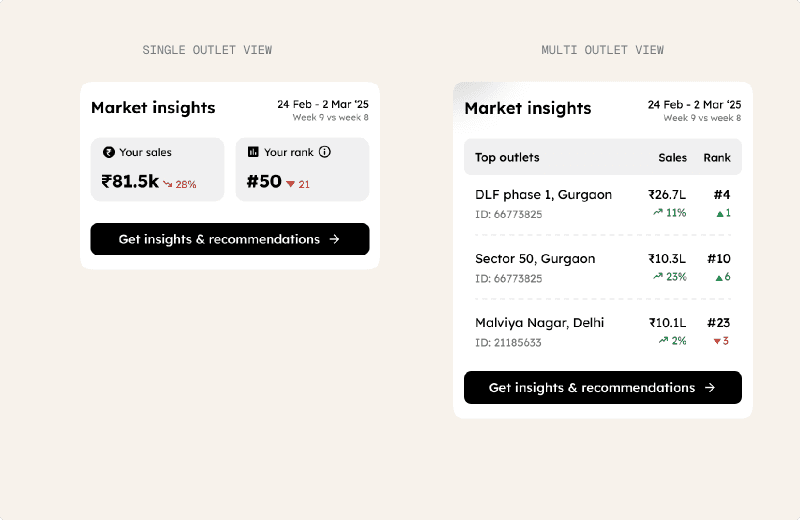
A unified, cross-outlet view mirrored how owners think letting them monitor and act across kitchens without switching screens.
Reflections
Transparency and achievable gaps mattered more than algorithmic precision
Editable peer sets built more trust than perfect algorithms
We debated hiding peer selection to avoid gaming. But letting partners adjust filters created buy in. 12% edited their cohort, and even with bad news, they trusted it because they controlled the comparison.
Competitive context made generic recommendations actionable
Partners needed to see the gap and the target, not just the metric. Competitive framing turned vague advice into concrete goals
Performance gaps needed to feel closable
Partners acted on 10-25% gaps. Wider gaps (40%+) created resignation. We calibrated benchmarks to show achievable deltas, not aspirational ones